
Take the long view: join us for 4 Modules of deep learning over 12 evenings/mornings .
60 hours of learning. 18 hours of CPD.
Starting May 22-24, Module 1. June 26-28, Module 2. Sept 11-13, Module 3. Oct 16-18, Module 4.
Time: Fridays-Sun 0730-1230 UK & AUS 1630-2130 (AEST)/NZ 1830-2330.
Cost: Sterling £1,600. AUD $3,200+ GST = $3,529 for all four modules. £495/$988 + GST per module bought separately.
Contact us if you’re in America and interested in joining us
Our long-form EMDR & IFS course is now split into bite-size chunks to run over four immersive weekend workshops spread across 2026. Plus, there are more contact hours to create more space for questions and practice. We’re canvassing opinions on whether to run the 16-week programme again in 2026. Do let us know your views.
We meet Friday, Saturday & Sunday at 0730-1230 if you’re in the UK which is 1630-2130 Syd/Melb time if you’re in Australia and 1830-2330 if you’re in New Zealand. This takes you beyond the EMDR standard protocol of basic training (this course is only for people who’ve completed the full EMDR basic training). So now you can begin to explore the territory of EMDR psychotherapy. Thus addressing the full clinical picture of individual, relational and behavioural issues for clients, so that you’re able to treat any symptom that walks in the door from depression, anxiety, phobias, addiction, OCD, through to relationship and parenting challenges. This is relational EMDR: both the relationships within the client and their own inner family; the therapeutic relationship; and the client’s relationships with their external family plus the wider community. All of these enter the therapy room in some way. Read one way to explain IFS-informed EMDR to a client.
But this course takes you beyond skills and into the terrain of working with your own parts, the parts of us, the therapists that become overwhelmed by clients, feel over-responsible and sometimes feel frustrated that our clients won’t find that target. Read Annabel’s EMDRIA blog here on how adding IFS to EMDR makes it safer. Watch Annabel’s interview with Rotem Brayer on the Art & Science of EMDR podcast here.
After workshops the facilitator team runs monthly consolidation supervision & practice groups. Be sure to sign up for them as the course ends. That way you can keep learning and embed your skills in your practice with clients long after the workshops finish. To join the Australian team go here.
Feedback from previous workshops
- “This course was transformative for me both personally and professionally and has profoundly enriched my practice.“
- “My life has been changed by this course.“
- “Honestly, it was a wonderful learning experience. I use the skills daily.”
- “Beforehand I had felt tired and jaded in my practice, wondering whether I should wind down and retire. Now I feel inspired and a new sense of purpose and enthusiasm.”
- “This has been the most wonderful, most transformative training. Thank you.”
- “The protocols were full of hope and I think this is the real magic… all the course is very magical and I would not say that lightly.”
- “Incredibly valuable to gain a deeper understanding of my parts, their origins, and how they influence me. I appreciated how this training program effectively brought all my previous learnings together, helping me to integrate and apply them.”
- “It was pretty terrific.“
- “Annabel, and the team, you are a gift to the EMDR community.”

A review in EMDR Therapy Quarterly of one of our first IFS-informed EMDR workshop said: “I came away from the training full of new ideas about how to work with clients when in the past a session may have got stuck or when there was a lack of growth. Due to the way the course was designed and the material presented, I felt confident to begin utilising the new skills the very next day when I went back into my clinic. Since then, I have used the skills so often that now I barely recognise they are new. I would recommend this course unreservedly”.
Read two long articles Annabel wrote on IFS-informed EMDR both published in the EMDR Therapy Quarterly. The first talks about how IFS enhances EMDR, to read click here. The second article is a composite case study, to read click here.
Harnessing the insights of parts & ego states by using an IFS-inspired approach to trauma healing.

Want to join us on the journey of blending EMDR & IFS?
EMDR and IFS are the most powerful therapies available for activating the brain’s natural healing mechanisms, which EMDR calls the Adaptive Information Processing Model or AIP and IFS calls unburdening. Both approaches bring about memory re-consolidation to change the way the brain stores memories and thus overcome debilitating symptoms such as depression, anxiety, eating disorders, behavioural and substance addictions, physical conditions including chronic fatigue and fibromyalgia, as well as severe illnesses such as borderline personality disorder, self-harm and suicidality. Read what Annabel’s written about breaking the taboo of suicide.
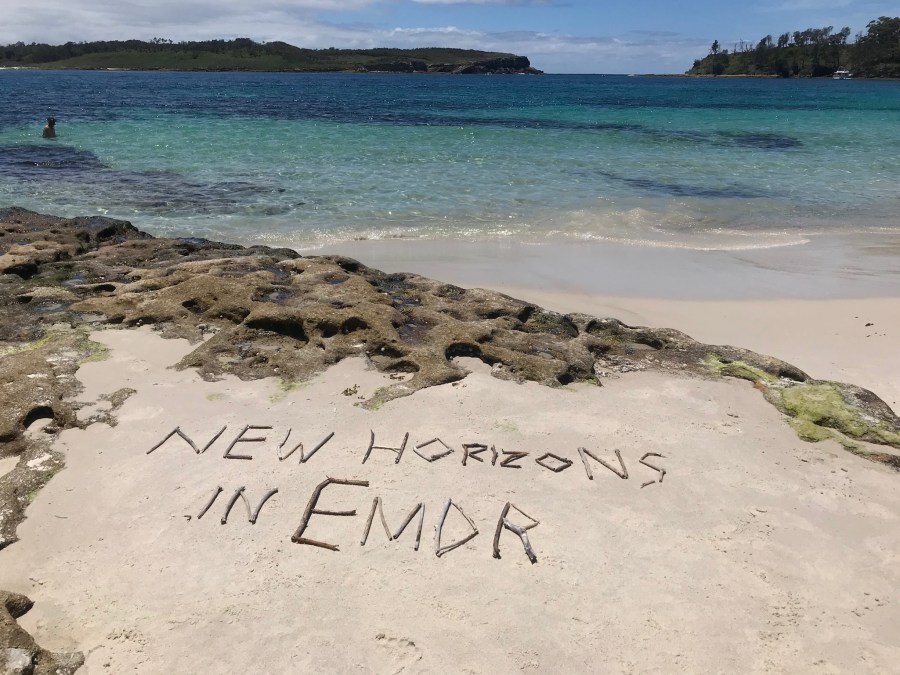
- Many people find that a single short weekend workshop isn’t enough to really deepen the learning, to embed the tools into their practice. By meeting for four intensive modules, over six months, you’ll get to take a deep dive into:
- Attachment-focused EMDR.
- Internal Family System (IFS) model.
- EMDR with Addiction.
- Understand your own internal system & parts.
Attachment-focused EMDR, also known as attachment-informed EMDR, brings you Laurel Parnell’s innovations in simplifying the standard EMDR protocol, rich imaginal resourcing and a truly brilliant bridging technique that allows you to tap into the root causes of today’s presenting problems and symptoms.
The IFS model brings a relational set of tools to EMDR that offer ways to work with the most stuck, resistant and avoidant of clients. Firstly there’s a whole new approach to understanding targets, which now become parts in the IFS model. Parts who can be welcomed, seen, heard, even loved and appreciated for their positive intentions (not their behaviours). All the parts that drive dysfunctional, stressful symptoms are carrying burdens and trauma. It can be immensely healing to help clients discover parts, understand them, and then help the parts unburden their trauma so as to work together harmoniously like a happy inner family. In the later advanced modules (3 & 4) you’ll learn how to help clients befriend parts, called firefighters, who usually drive extreme, compulsive and addictive behaviours. You’ll learn how to blend IFS with EMDR protocols for working with addiction and compulsive behaviours.
You can take the learning at your own pace, practise a new skill each week, share with the group how you’re getting on with clients and ask questions to take you further.
The number of participants is capped at 24: This ensures you always have space to ask questions and don’t feel lost in a sea of Zoom faces. Please note places fill quickly.
There’s also a higher ratio of facilitators for the triads (1:3) so you’ll have a personal facilitator dedicated to supporting your practice, not just dropping in and out, interrupting your flow as a therapist and client. Many people name having supervised support during the practicums, from highly experienced IFSiEMDR consultants & practitioners, as one of the most valuable parts of the workshops.
We’re aware some people are already skilled in working with parts and ego states so please tell us on the registration form about your IFS level of experience. That way we can put you in practice groups with other novices or advanced colleagues, as appropriate. We may even run a future course specifically aimed at advanced IFSers to stretch you.
Many in the EMDR community are curious about IFS and what it can add to EMDR trauma processing, in fact, there’s quite a buzz. However, most IFS training courses, lasting ten full days (88 hours) are booked up, with long waiting lists of over a year, or places are even allocated via a lottery system. Then there’s the cost to contend with – usually around AUD $7,000 or Sterling £4,000. This 60-hour course is intended to fill that gap: to offer you the feel of IFS as it can be integrated with EMDR, along with the immersive supervised practice that’s central to IFS and intended to help you get to know your parts and your system in service of your clients. You may have been on courses where the facilitators pop in and out of your breakout room. On this course a triad of three has their own facilitator for the full practise time, creating safety, connection and cohesion in the group.
Curriculum for 2026
Friday, May 22 – Sunday, May 24: Module 1. Introduction to IFS informed-EMDR.
Welcome. During our first weekend we’ll be getting to know each other, learning some of the basic tools in IFS in ways that enhance EMDR, as preparation and interweaves. You’ll learn about different kinds of parts in IFS, and what Self-energy is. You’ll explore how to discover parts; unblend from them and befriend them. We’ll get used to going inside with IFS meditations each day. Plus, we’ll begin to work with protectors, the parts who can block EMDR. We’ll explore making parts maps and being parts detectors. There’ll be lots of time on Saturday and Sunday to ask questions and facilitated practise connecting with parts. Fridays: 0730-1230 UK & Australia 1630-2130 AEDT/ NZ 1830-2330. Please contact us if you’re in America and want to join us. We can make this happen in your time zone if you tell us.
Friday, June 26 – Sunday, June 28: Module 2. Integrating IFS & AI-EMDR protocol.
This module is all about a fuller integration of the two models, IFS & attachment informed-EMDR, with a guide for a full IFS & ai-EMDR protocol outlined in Handout 2 (H2). We also talk about our own therapists’ parts. Each day includes a meditation, a live demo and practice triads with facilitated support. We’ll also be reflecting on our own parts, and learning about therapists’ parts: how they help or hinder EMDR processing. Again, plenty of time and space for questions and practising the H2 protocol with facilitators. Fridays: 0730-1230 UK & Australia 1630-2130 AEDT/ NZ 1830-2330. Please contact us if you’re in America and want to join us. We can make this happen in your time zone if you tell us.
Friday, Sept 11 – Sunday, Sept 13: Module 3. Advanced IFS tools for EMDR.
Advanced IFS tools to enhance EMDR: working with polarised protectors, the parts who are in conflict with each other inside. This is the time to learn how to handle all the most tricky parts in our client’s who can block EMDR processing. We’ll get extra tools for when clients can’t unblend, such as direct access. We’ll look briefly at intergenerational trauma and legacy burdens. Plus, we’ll explore how polarised protectors drive compulsive behaviours, self-harm, suicidality and addictions. We’ll touch on some of the latest neuroscience, as well as ways to combine the best of the EMDR addiction protocols with IFS. Again, plenty of time and space for questions with facilitated practice. Fridays: 0730-1230 UK & Australia 1630-2130 AEDT/ NZ 1830-2330. Please contact us if you’re in America and want to join us. We can make this happen in your time zone if you tell us.
Friday, Oct 16 – Sunday, Oct 18: Module 4. Advanced IFS-informed EMDR protocols :
In our final module, we go deeper with ways to access Self-energy, this time with the transpersonal Preverbal trauma EMDR protocol, Handout 5. We’ll also explore other advanced IFS-informed EMDR protocols, such as Rescue & Repair Handout 3. We’ll delve further into effective tools for healing dissociation and working with clients with DID. The emphasis of module 4 is to deepen your skills in blending EMDR with IFS to handle more complex presentations with confidence. Fridays: 0730-1230 UK & Australia 1730-2230 AEDT/ NZ 1830-2330. Please contact us if you’re in America and want to join us. We can make this happen in your time zone if you tell us.
Post-modules the facilitator team runs monthly consolidation supervision & practice groups. Be sure to sign up for them as the course draws to a close in October. That way you can share your cases with like-minded colleagues and keep extending your skills.
Over the four weekends, we spend 60 hours together learning and practising. This equates to 36 hours of CPD. The EMDR Association UK will now only award 18 hours of CPD so we have also applied for EMDRIA CE credits and anticipate receiving these as they were awarded previously.
Cost in sterling £1,600, please email for an invoice. AUD $3,200 + GST = $3520.
Spaces are limited to 24.
The first payment button will charge you $395 in Australian dollars (the payment button will auto-convert to UK pound sterling). This is to pay your deposit.
This second button is to pay over six months at a 10% supplement.
The wonderful EMDR Insight team are running Inter-Module Consolidation groups to complement and deepen your learning. These groups are aimed to support and empower you if you need an extra practice opportunity between each of our teaching Modules 1, 3, 4, with 2 practice groups running after Module 2 because there is such a big break.
The extra charge for these groups is $220 AU, £100 UK. Many participants find the groups helpful to maintain the momentum of the workshop learning. These times are specifically for Australians: Tuesday 9-11am Sydney time:
- In-between Module 1. May 22-24. – Tues, June 16th. 9-11 am Sydney time.
- In-between Module 2. June 26-28. – Tues, July 21st. 9-11 am Sydney time.
- – Tues, August 18th. 9-11 am Sydney time.
- In-between Module 3. Sept 11-13. – Tues, Sept 29th. 9-11 am Sydney time.
- After Module 4. Oct 16-18. – Tues Nov 17th. 9-11 am Sydney time.
To join, email Jacqueline Conroy jacquelinemconroy@gmail.com
These times are specifically for the UK participants running on Friday morning, 9 am-11 am (UK time). To join email Flora Saxby florasaxbycounselling@gmail.com
- In-between Module 1. May 22-24. – Fri June 12th. 9-11 am UK time.
- In-between Module 2. June 26-28. – Fri July 24th. 9-11 am UK time.
- – Fri August 21st. 9-11 am UK time.
- In-between Module 3. Sept 11-13. – Fri Sept 25th. 9-11 am UK time.
- After Module 4. Oct 16-18. – Fri Nov 20th. 9-11 am UK time.
